Research
Background
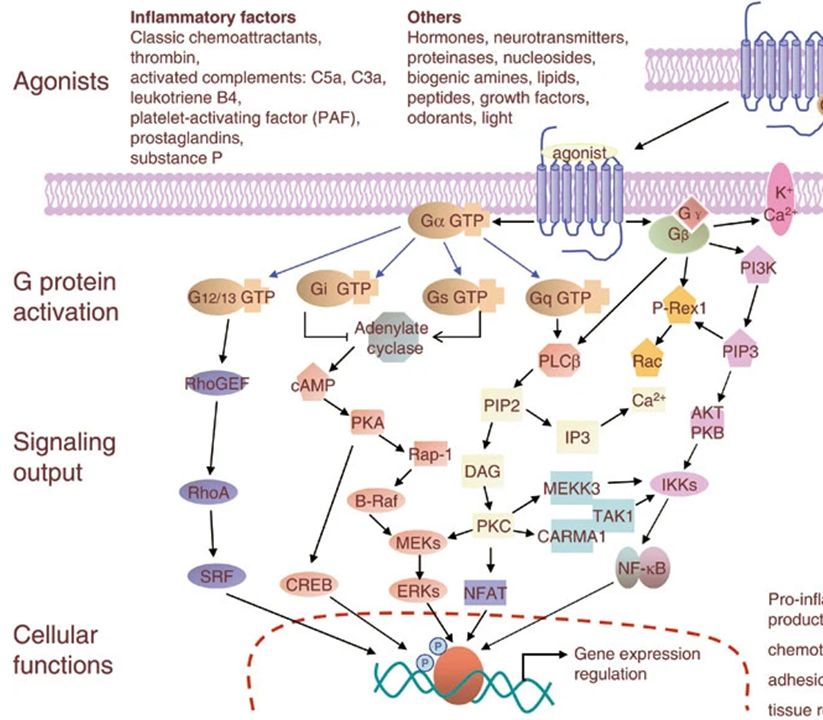
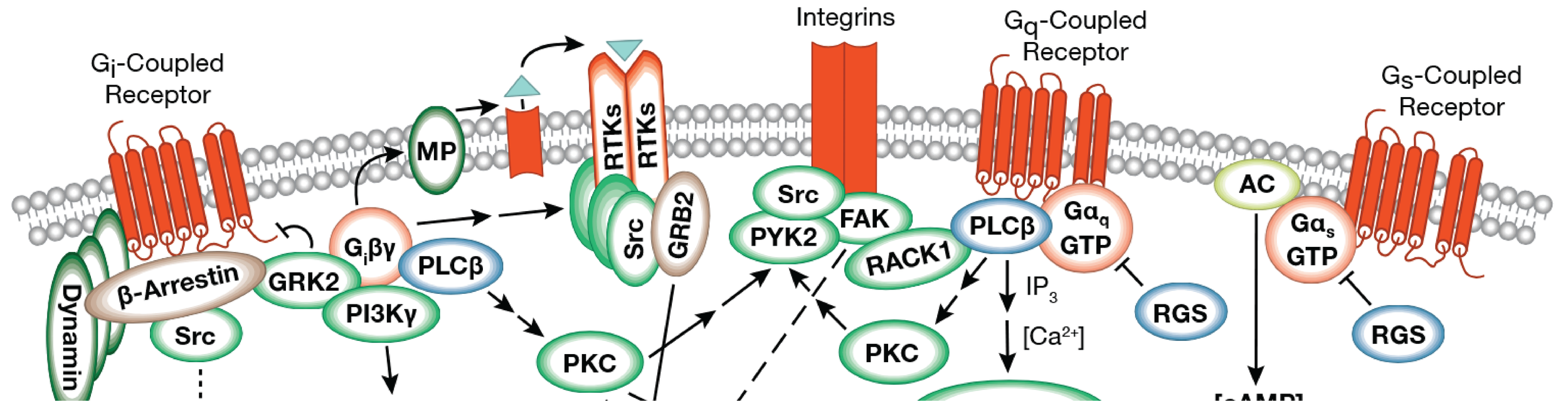
G protein-coupled receptors (GPCRs)—the largest and most diverse family of cell surface receptors in humans—are expressed in virtually every cell and tissue in the human body. These receptors regulate many physiologic and pathophysiologic processes by responding to diverse extracellular signals, including proteins, peptides, small molecules, lipids, light, and mechanical force. Ligand binding induces a conformational change in the GPCR that, in turn, activates heterotrimeric G proteins and downstream intracellular signaling cascades.
Limitations and unmet needs
Decades of GPCR drug-discovery efforts have led to clinically approved therapies for a wide range of diseases, including cardiovascular disease, cancer, diabetes, neurodegenerative disease, and obesity. Despite this success in pharmacologically targeting GPCRs, existing therapeutics still fall short in their ability to precisely control GPCR signaling networks. GPCR engineering has lagged behind that of other receptor classes, several of which have already reached the clinic as cell therapies capable of mediating context-dependent cellular responses. Furthermore, effective methods for developing ligands that selectively activate specific GPCR signaling pathways (biased ligands) remain limited, hindering efforts to create safer and more effective therapeutics.
Our research goals
Our lab seeks to address these challenges. Our long-term goals are to unravel the molecular and cellular mechanisms of GPCRs in health and disease, develop next-generation GPCR-based therapeutics, and pioneer technologies that are widely adopted across fields and disciplines to broadly impact biological and therapeutic research. We are currently working towards these goals by pursuing the following research directions:
Direction 1
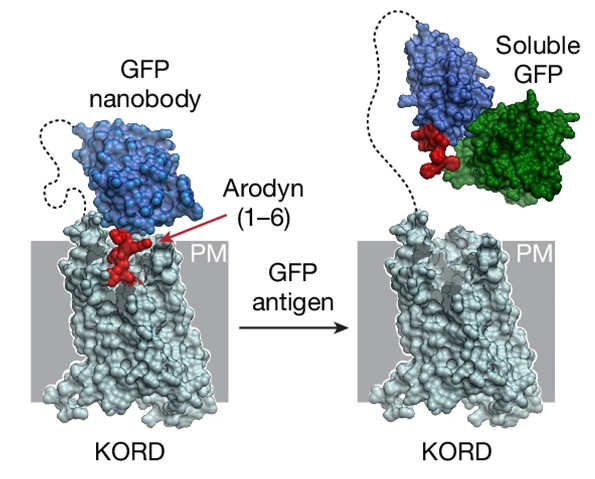
Engineering novel synthetic receptors using GPCRs for cell and gene therapy applications
Direction 2

Discovery and engineering of novel GPCR ligands
Direction 3